
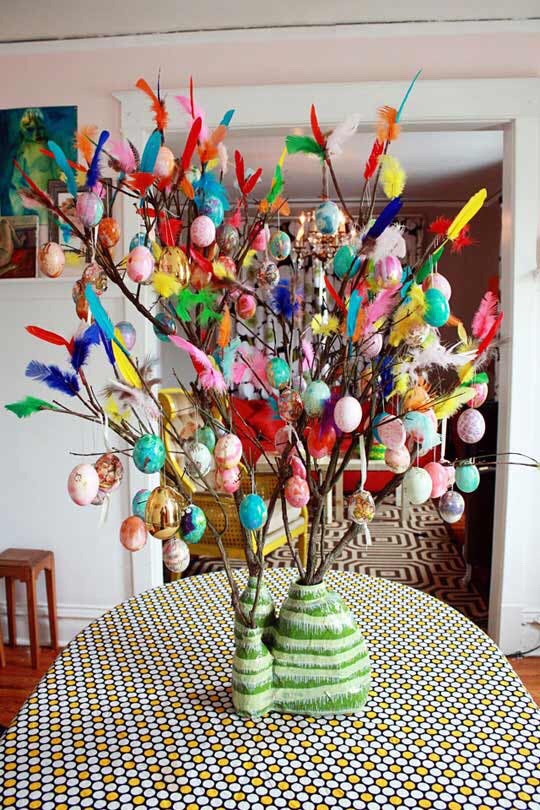
 The average Swede celebrates Easter with the family, eats four eggs, gives away and eats Easter candy and decorates with Easter twigs. According to a survey in Sweden, the most important and most common dish on the Swede's easter table is eggs. More than half of the respondents stated that eggs were most important on the Easter table, followed by herring (16%), salmon (7%), and Jansson's temptation (6%). Only 6% eat lamb for Easter.


EASTER IN SWEDEN

The Swedish translation for Happy Easter is "GLAD PASK!"
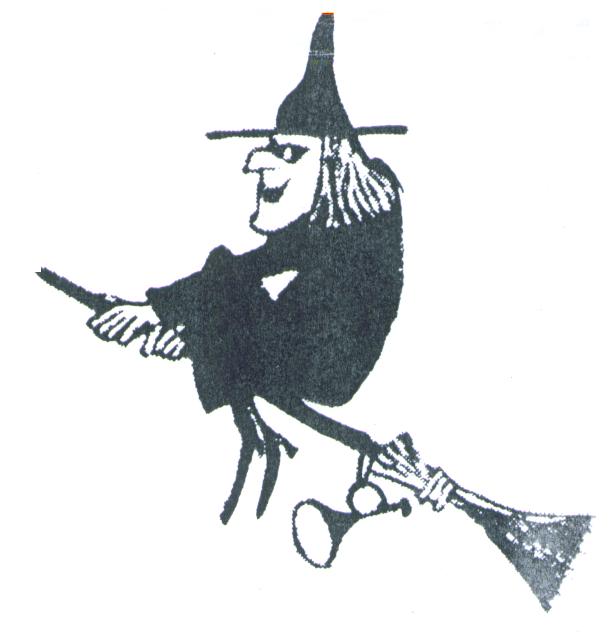
In Sweden long ago, Easter was thought to be the witches time. In west Sweden they lit Easter bonfires around which people would scream and yell to frighten away the witches. On Maunday Thursday the witches were said to fly off to “Blakulla” and return again on the Saturday.
Nowadays, children dress up as Easter witches on the Thursday before Easter and go from house to house and are given gifts or money - very similar to the North American Halloween.
After the long fast during Lent, eggs were eaten in celebrations, often taken from the nests of the spring birds and children would play games with eggs - such as rolling the eggs. The older children in Skane would assemble at a special celebration when they would dance, play games and eat eggs.
The Easter egg has a long history . In graves from B.C. in Gotland, colored clay eggs were found. They were painted in red and yellow as the eggs represented the sunrise and sunset - and even today the Swedes, like other Europeans paint their eggs at Easter.
As a reminder of Christ’s suffering, young people would thrash each other with silver birch twigs on the morning of Good Friday. These silver birch branches, decorated with brightly colored feathers, were the originator of both the Lent and Easter decorated branches.
Semlor are special buns that used to be associated with Lent but now seem to be sold earlier and earlier in the year. They consist of a sweet bread bun when the middle is scooped out and filled with marzipan and whipped cream. Otherwise, lamb is often eaten at Easter as well as many of the dishes eaten at the Christmas Smorgasbord.
 EASTER CUSTOMS
Easter Sunday, of course, cannot come
earlier than March 22 nor later than April 25 and must fall on the first Sunday
after the first full moon following the vernal equinox. In Sweden, the Easter
holiday lasts four days — Friday through
Monday — ample cause for
escape to the mountains to enjoy the newly returned warmth of spring.
Easter has always been a serious
festival — a fact
noticeable years ago in people’s mode of dressing at this time. There is not
the same wealth of popular custom and tradition attached to Easter as there is
to Christmas. However, the two festivals have one particular thing in common:
The majority of the customs are connected with the home and the family.
In pagan times, the people of
Scandinavia believed that several times each year witches flew over the lands
to confer with the demons who were their masters at meetings called Witches’
Sabbaths. Thursday, particularly the one before Easter, long has been regarded
as the night favorable to such super-natural dealings.
“Much superstition was also connected
with this day. Witches were astir and it was necessary to keep all doors
closed. And it was important not to lend anything or give anything away. For
further protection all thresholds and door posts should be smeared with tar and
the sign of the cross be marked out everywhere, even on the noses of the cattle. It
was believed that witches needed animals to ride on for their Journey to Blakulla, the fictitious mountain where the devil awaited
them for a secret conclave. In addition, these witches needed glowing amber
from the fireplaces and butter or ointment in their horn -- better close the damper quickly . . Had not the people of old seen them ride on their
broomsticks through the sky with the black cat, the horn, the kaffepetter (coffee pot),
and
with their hair flowing in the wind? And had not grandmother told in her days about the elaborate feast the witches had each
year with the devil himself, and about the wild dancing afterwards to the music of croaking magpies?
Oh, those birds -- everybody
knew they were away over Maundy Thursday!”
In 18th century
Sweden, these kinds of imaginings
and superstitions produced the same kind of witch hunts and persecutions that
we learn of in American history at approximately the same time.
“Good Friday, in
Swedish called Langfredag, is still a
solemn holiday in Sweden and in childhood memories the longest day of the year,
Just as the name indicates. All grown-ups were dressed in black, making them
look very somber, and we children had orders to sit quietly with our books hour by hour. We were forbidden to
touch steel, such as a needle or a pair of scissors -- It would violate
the memory of Christ’s suffering on this day. We were not allowed to go out. No
one came calling. In the morning mother had given us a playful little slap with
the birch twigs to remind us of what day it was. As if we could forget! This
somber mood was so instilled in
the Swedish
mind that many an immigrant Swede was shocked when he learned that in America
stores and shops were open on Good Friday and that the day was regarded as a
workday.” +
That
witches were in some way identified with Easter may be derived from the fact
that Maundy Thursday (Skartorsdag) is followed by
Good Friday and is thus of special significance. The dark superstitions of
ancient days are gone, but today little Swedish girls take special delight in
playing Easter Hags. Early in the afternoon on the Saturday before Easter,
which was believed to be the day when the witches flew back from the meeting to
their homes, the girls begin to get ready!
To an Easter witch, a shining copper
kettle is essential. She should have a broomstick and a black cat as well, but
the throngs of little witches who suddenly appear about the streets on the Saturday
before Easter usually
content themselves with only the copper
kettle and, of course, mother’s old cotton summerskirt (reaching right down to
the ground), a shawl, kerchief, and apron. With some soot smeared on her face,
the “hag” is ready to terrify the neighborhood.
“Ring,” goes the doorbell — and there are three small witches shaking
their kettles at you. To avoid having
a wicked spell cast over them, the properly frightened neighbors toss coins or
candies into the kettles. The pleased witches curtsy and scamper off, giggling,
to the next doorway. Little Easter witches ring doorbell after doorbell, but
before long their kettles are full, and they hurry home to help dye eggs.
Perhaps eggs and their decoration play a greater role in Sweden, or at least a more
ancient one, than anywhere else, for the Swedes still tend to celebrate the eve
of the old festivals in the old way. The significance of eating eggs at Easter -- which, of course, marks the end of the Lenten Fast -- lies, first, in the fact that this is about the
time when the hens normally begin to lay; and, second, in the fact that in the
past the egg was a delicacy and a luxury, something which was eaten only on
special occasions, thus making egg eating at Easter a great event. Today the
egg is everyday food, and the Easter habit is retained as a quaint tradition
than anything else. The only difference is, perhaps, that most Swedes normally
prefer soft. boiled eggs; while on Easter Eve they must be served hard-boiled.
Thus, when the little witches get home
again, they set about coloring a really vast number of eggs with brilliant
dyes, patterns, comic faces, and even sayings which must be read at the meals.
The children can hardly wait to begin. It’s a family party. Even the baby’s
chubby hand is guided through the dipping of an egg. Not only do they serve as
the main dish on the Saturday before Easter, but some families compete to see
who can eat the most-- from 10 to 20 is not unusual. Not all may be consumed
that evening, however. Mothers are careful to set aside enough, both raw and
hardboiled, for the other games included in the Easter celebration -- the egg hunts
through house and garden, the egg rolling down the sandy dunes along the coast
(while children shout with glee when they collide and spill all over the slope), and
among those who reside
in harbors and fishing communities.
Have you ever heard of aggapickning?
Here’s
the way it goes: Two players stand opposite each other, one holding his egg
still, the other using his for attack. The rule is strict: end to end, never
the sides. The winner is the one whose hard-boiled egg is unbroken after the
assault. The merriment and contests last far
into the day. For those who lose their
eggs, there is always a youngster with a basket ready to replenish the losses.
Those who have stayed at home for the holiday spend Easter Monday visiting
friends and relatives and sipping tall glasses of the traditional ‘eggtoddy’ — a delicious mixture of egg yolk, sugar, sherry and
boiling water.
To a Swede,
much of the enjoyment of Easter is his anticipation of spring and the warm
weather outings which follow. He thinks of his boat and how it needs to be
scraped and repainted and of the first balmy day when the family congregates
with tools and paint and a coffee basket to help father get their beloved boat
ship-shape for those eagerly awaited jaunts on the lake or along the coast.
Only a true boat lover can stand the thin screeching noise of the scrapers as
they rip off the peeling varnish and paint. But, to him, this is spring’s own
music. By Whitsun, she’ll be ready. Launching will be a communal business.
Every boat owner comes to lend a hand, pushing the boat over rollers
to the launching cradle, which gently slides down into the water. Next
weekend, the yard will be deserted. The fine companionship of the scraping days
will be over for this year, and once tireless scrapers will be lazily
afloat on the myriads of lakes or among the countless islands which dot the
Swedish coast line .- but that time
is not yet.
As
the days grow longer and warmer, thoughts and celebrations turn outward, for a
true Swede, in warm weather, will spend as much time enjoying the sun, greenery,
and glories of nature as he can for as little time as it is available. Thus, at
Walpurgis Eve and Midsummer most of the celebrations are outdoors and involve
large gatherings of people - not indoors with artificial light and only
family-oriented, like Christmas and Easter.
Valborgsmassoaften
A blaze of light. . - a crackling
roar...flames in the night sky. . . the thunder of
warriors banging sword hilts
against tough leather shields — these were the characteristics of the Viking
ceremony of Walpurgis Eve (Valborgsmassoaftenn), the last day
of April. The stirring
ceremony has survived from those pagan days, when the warriors held annual feasts in
honor of the returning sun and warmth. Surely, this frightening scene
sent the demons of darkness and gloom scuttling elsewhere, as it wa8 meant to do. When the
Scandinavians were converted to Christianity, they did
not easily forget their old fears and
would not give up their pagan rituals.
Valborgsmassoaften
survives today in Sweden as an
annual festival in honor of the
returning sun and warmth.
In the Lhnstian year, however, the spring rite falls on a feast day of St.
Walpurga —a good, wise, and learned lady who lived in the eighth century and
was believed to have worked many miracles. Today, the custom is celebrated
throughout Sweden as a
welcome to lengthening days. Dominant
in the Walpurgis Eve celebrations is
the lighting of large bonfires around
which crowds of people gather. Usually, a speaker eulogizes the advent of
spring and the spirit of the fire, which foretokens the coming of the
sun. While the young people raise their voices in spring songs and
dance in a ring around bonfires, the elders study the flames: If they blow to the
north, spring will be late and cold; if
to the south, early and mild.
Let us not forget the spring
festivities of students -- most particularly
at Uppsala, but now at all the other
universities as well when, on the eve of
April 30, amidst great ceremony, they formally don their white student
caps, as yet another indication of the coming of spring, . a custom which began in the 19th century
but continues as a tradition today.
Visualize thousands of students gathered in front of the university library on the
hill, each carefully concealing his precious white velvet cap with a shiny black visor earned through years of hard study in a gymnasium, or
secondary school. Only those graduates have the right to wear them. Not worn
since cold weather set in, they prepare to
put them on again for the first time
that year.
A university official stands on
the balcony. Promptly at 3:00 p.m. he
signals. The students pull out their
caps and, with a tremendous shout, wave them high in the air. A speaker talks
briefly about past and future accomplishments, concluding with an
invitation to join in a four-fold
cheer for our nordic
spring: Long may she live’
Arm-in-arm, the students charge down the
hill to the square, those first lines turning about and back up the hilL With a
roar, they crash into the’ students still running down to
tin square. The spring “fun battle” goes on
for the rest of the afternoon.
At twilight, becoming quiet arid solemn,
the students take up lighted torches, banners and flags and march in silence up
the slope below the castle. As the bell strikes nine, the men’s university
choir breaks into the traditional student songs, most praising the return
of spring. But always there is the special song: “0 Sing of the
Student’s Happy Days” After another speech welcoming spring and more cheering
for king and country, the young people stream away
to have supper at restaurants and
homes or at one of the 13 student clubs where the singing and dancing
continue until sunrise.
by Karen K. Johnsen District
Cultural Director
Vasa Order of America April, 1983